ACA Safety & Rescue Instructor Alliance

Resources

Committee Statements and ACA Policy

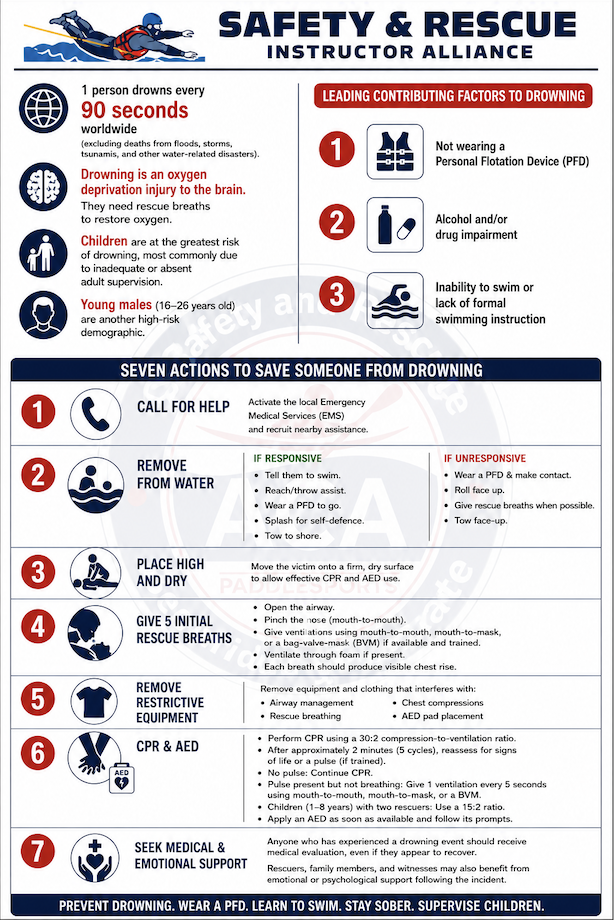
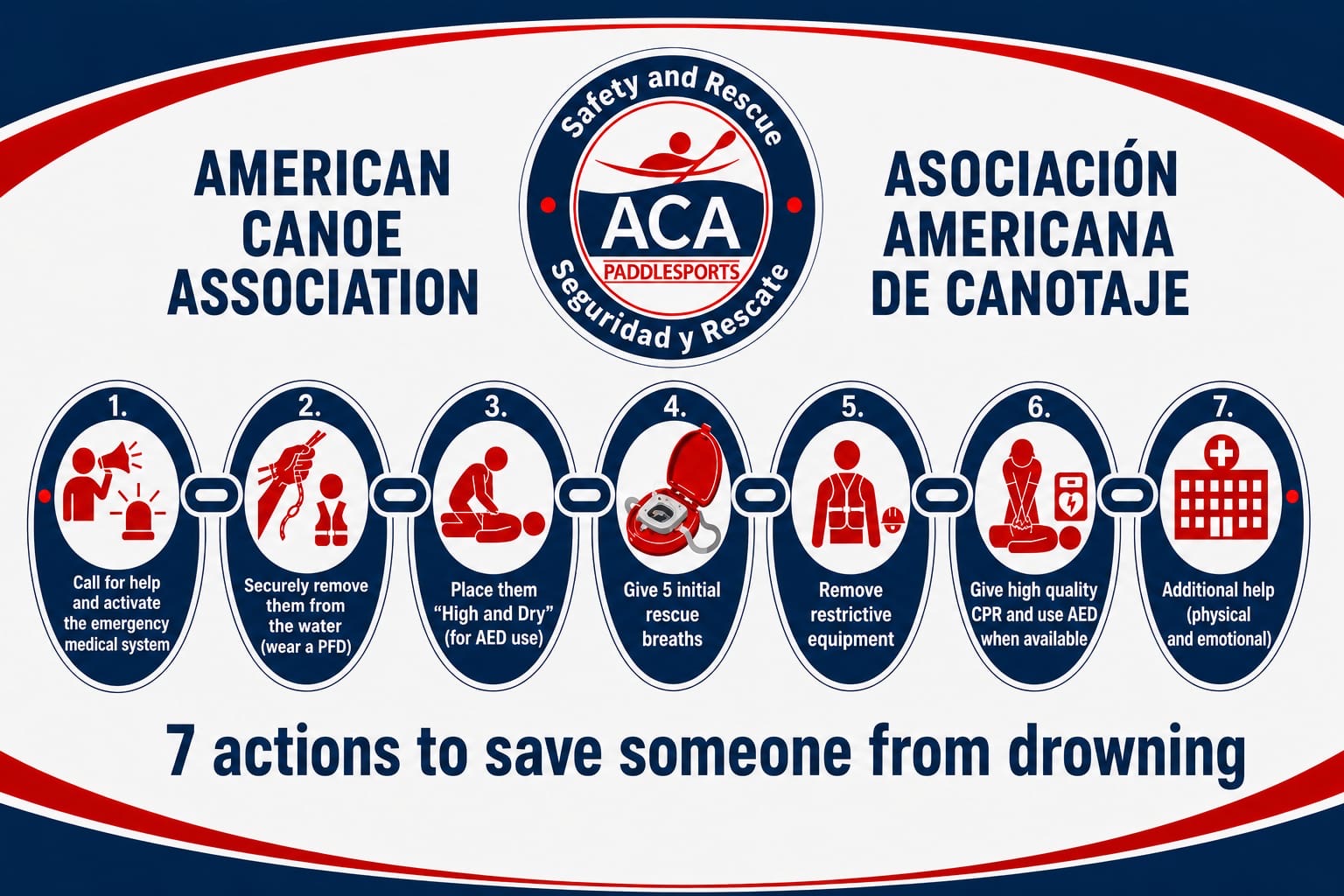
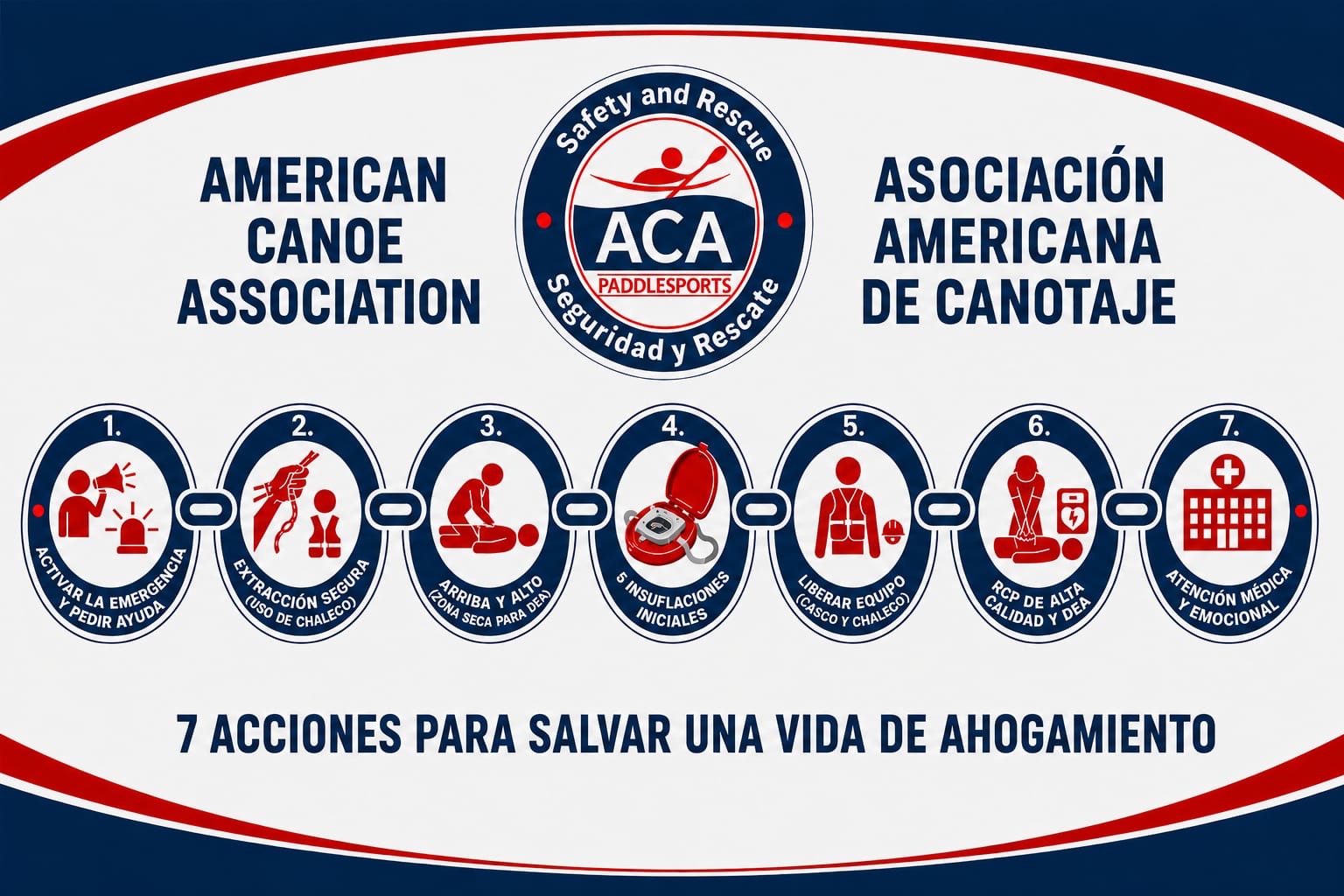
Seven Actions to Save Someone from Drowning

Step 1
Call for Help

Activate the Emergency Medical System (EMS) and recruit nearby assistance.

Step 2
Remove from Water

If Responsive

  • Tell them to swim.
  • Reach/throw assist.
  • Wear a PFD to go.
  • Splash for self-defence.
  • Tow to shore.

If Unresponsive

  • Wear a PFD and make contact.
  • Roll face up.
  • Give rescue breaths when possible.
  • Tow face-up.
Step 3
Place High & Dry

Move the victim onto a firm, dry surface to allow effective CPR and AED use.

Step 4
Give 5 Initial Rescue Breaths
  • Open the airway.
  • Pinch the nose for mouth-to-mouth ventilations.
  • Give ventilations using mouth-to-mouth, mouth-to-mask, or a bag-valve-mask (BVM) if available and trained.
  • Ventilate through foam if present.
  • Each breath should produce visible chest rise.
Step 5
Remove Restrictive Equipment

Remove equipment or clothing that interferes with:

  • Airway management
  • Rescue breathing
  • Chest compressions
  • AED pad placement
Step 6
CPR & AED
  • Perform CPR using a 30:2 compression-to-ventilation ratio.
  • Reassess after approximately 2 minutes (5 cycles) if trained to do so.
  • No pulse: Continue CPR.
  • Pulse present but not breathing: Give 1 ventilation every 5 seconds.
  • Children (1–8 years) with two rescuers: Use a 15:2 ratio.
  • Apply an AED as soon as available and follow its prompts.
Step 7
Seek Medical & Emotional Support
  • Anyone who has experienced a drowning event should receive medical evaluation, even if they appear to recover.
  • Rescuers, family members, and witnesses may also benefit from emotional or psychological support following the incident.

Developed in collaboration with

American Canoe Association (ACA) Safety & Rescue Instructor Alliance (SARIA) Wilderness Medical Society (WMS) U.S. Coast Guard Auxiliary